The Origin of My Nickname: Gone with Melon/西瓜飘啊飘
My long-time online nickname is "西瓜飘啊飘" which I would loosely translate as Gone with Melon.
It began as a joke, but like many good jokes, it carried more than I first intended.
"西瓜", or watermelon, was a childhood nickname. I had a round face back then, and a classmate once touched my head after a discussion and called me a watermelon. The name stayed. I liked its absurd accuracy: green and ordinary on the outside, yet full of dense, vivid sweetness within. The "西" also echoes part of my real name, the variable (x_i), the road less taken, and a vague sense of hope. The second half,
"飘啊飘", came years later, after reading Gone with the Wind. What struck me was not the romance, but the way personality bends under history. Scarlett’s tragedy was not merely personal weakness; it was also the pressure of war, survival, and a collapsing world. I remember finishing the book on a rainy evening, alone in a dark room with only a desk lamp on. I suddenly felt that war, in a broader sense, was not an exception but a recurring condition of life. Stability is fragile. Survival is not guaranteed.
Out of that mood came the image: a watermelon floating.
At first it was melancholic. Then, after repeating it a few times, I burst out laughing. A floating watermelon is too ridiculous to remain tragic. It is clumsy, bright, weightless, and strangely alive. That tension — between sadness and comedy, heaviness and lightness — is exactly why I kept the name.
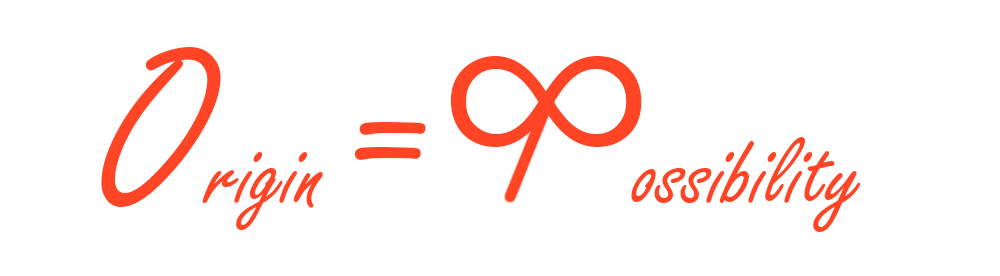
Later, in an art class, I saw Father, Sunflowers, and Impression, Sunrise. The contrast stayed with me. Realism gives a subject concrete weight. Impressionism leaves space for the viewer’s own perception. A watermelon, a sunflower, and a sunrise are all ordinary natural images, yet each can become a vessel for private meaning. The simplest object, when left open enough, can invite endless interpretation. This led me to an intuition I still care about: zero is another form of infinity.
Zero is not merely nothing. It is an open state before fixation. When we first encounter something we do not yet understand, we may actually be closest to its full possibility. Once we name it too quickly, we reduce it. Once we force it into familiar categories, we often stop seeing it.
A sphere is a good example. From one angle, it may appear simple and complete. But if the sphere is larger than us — say, the Earth — one view is not enough. Understanding requires movement, multiple perspectives, and the willingness to revise. Even when something is truly spherical, uneven light can make it appear different from different positions. The same is true of society, nature, and the mind: information is fragmented, perspective is local, and certainty often arrives too early.
This is why I am skeptical of crude empiricism. Time, facts, results, money, energy, and attention are all important, but they are also resources. They help produce knowledge, yet they should not be mistaken for the highest guide of judgment. "Let time prove everything" sounds mature, but time itself is not wisdom. It is only a medium through which feedback accumulates.
The deeper question is how we treat the unknown.
When an empiricist mind meets something unfamiliar, its first instinct is often fear. It tries to drag the new thing back into old experience, preferably a negative one, because negative templates feel safer. This is how path dependence disguises itself as prudence. By contrast, a mind that understands its own limits can hold multiple incompatible explanations at once without immediately collapsing into anxiety. To me, this is one of the clearest signs of intellectual maturity.
I also think this is where many social hierarchies lose their charm. Status games often arise from scarcity: limited resources, limited recognition, limited confidence. People rank others because they fear being ranked first. Even reaching the top of such a hierarchy does not feel like freedom. It only means one has learned to sit more comfortably inside the same cage.
What I care about more is the ability to step outside a single hierarchy and move among different possible worlds — different truths, value systems, disciplines, and ways of seeing. There is real joy in that movement. It is not the joy of winning, but the joy of escaping a narrow frame.
In this sense, "Gone with Melon" is not just a nickname. It is a small self-adaptive image: ordinary enough to be approachable, strange enough to resist closure. Like a funhouse mirror, it reflects not only itself but also the observer. Different people see different things in it — humor, childishness, loneliness, optimism, absurdity, freedom. That is part of the design.
For me, it records a genuine moment of discovery: that something can be ridiculous and meaningful at the same time; that comedy can grow out of tragedy; that a finite life can still create open-ended interpretations through interaction with others.
I do not think every idea must serve productivity. Some ideas matter precisely because they do not. They preserve a part of us that is not reducible to output, status, or utility.
That is why I keep this name.
A watermelon floating through space is not a theory, not an achievement, and not a brand. It is a reminder: stay light without becoming shallow; stay strange without losing sincerity; stay open before the world forces you into a fixed shape.
And if, years from now, I no longer remember why I wrote this, I hope I can still look at the phrase and laugh.
That would be enough.
 Xi(Sean) Chen 陈熙